.png)
The Evolution of Casino Games through History
Casinos today dazzle players with neon lights, immersive digital experiences, and a dizzying array of games. But the journey from ancient dice to modern mobile apps is a rich tale of innovation, societal change, and cultural fascination. How did the simple act of betting evolve into the sophisticated, global industry we know today? Let’s take a deep dive into the evolution of casino games through history, exploring key eras, technological breakthroughs, and the shifting role of chance and skill in human entertainment.
The Ancient Roots of Gambling
Gambling is as old as civilization itself. Archaeological evidence reveals that humans have engaged in games of chance for thousands of years. The earliest recorded forms of gambling date back to around 3000 BCE in Mesopotamia, where six-sided dice made from animal bones were discovered. Ancient Chinese texts from 2300 BCE describe a rudimentary lottery system, while Egyptian tombs have yielded dice and gaming boards traced to 1500 BCE.
By the time of the Roman Empire, gambling had woven itself into daily life. Romans bet on everything from gladiator games to chariot races, using tokens and dice. Even Roman soldiers, off duty, played a precursor to today’s backgammon called "Ludus Duodecim Scriptorum."
Key facts: - The oldest dice found are over 5,000 years old. - The first known lottery was organized in China to fund public works, possibly including the Great Wall.These early games were not just pastimes—they reflected cultural values and were often linked to fate, luck, and the favor of the gods.
From Salons to Salons: The Birth of Formal Casino Games
The word “casino” has Italian origins, meaning “little house.” The first true casinos emerged in 17th-century Italy, providing a controlled environment for gambling. The famous Ridotto in Venice, established in 1638, is considered the world’s first legal public casino. It offered games like Biribi (a lottery-style game) and Basetta, a precursor to baccarat.
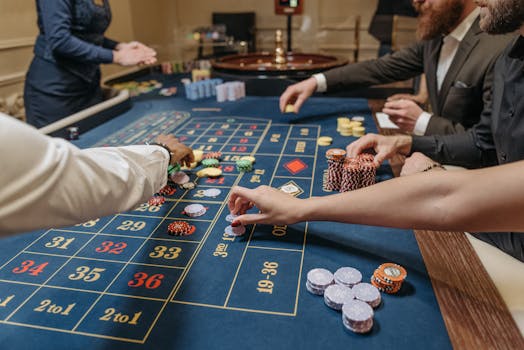
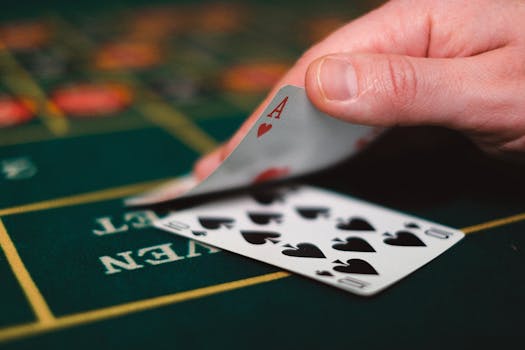
As gambling spread across Europe in the 18th and 19th centuries, so did the refinement of games: - France saw the development of roulette in the 1790s, combining elements of earlier Italian and English games. - Germany’s elegant casinos, like those in Baden-Baden and Wiesbaden, introduced new card games and refined existing ones. - Britain popularized card games such as blackjack (then called “vingt-et-un”) and poker, which quickly crossed the Atlantic to America.The rise of these establishments was closely tied to aristocratic society. Gambling salons hosted social elites, where etiquette, strategy, and luck mingled in equal measure.
The American Transformation: Riverboats, Saloons, and the Wild West
When gambling reached the United States, it adapted to a new environment. The Mississippi River in the 19th century became the epicenter of chance, with riverboats hosting poker, faro, and dice games. As settlers moved west, gambling became part of frontier culture. Saloons in towns like Deadwood and Tombstone offered games such as:
- Faro: The most popular card game in the West, with fast-paced action. - Three-card monte: A con game that thrived in the chaos of the Gold Rush. - Poker: Evolving into iconic forms like five-card draw and stud poker.In 1931, Nevada legalized gambling to combat the effects of the Great Depression. Las Vegas emerged as a gambling capital, introducing glitz, glamour, and large-scale casino resorts. By 1978, Atlantic City followed suit, cementing America’s love affair with casinos.
Key statistics: - By 1900, over 100 riverboats operated as floating casinos on the Mississippi. - Today, Nevada’s gaming industry generates over $11 billion in annual revenue.Technological Revolutions: From Mechanical Marvels to Online Gaming
The evolution of casino games is inseparable from technology. The late 19th century saw the invention of the first slot machine by Charles Fey in San Francisco in 1895. His Liberty Bell machine, featuring three spinning reels, became a sensation. By the mid-20th century, electromechanical slots introduced new features like flashing lights and big jackpots.
The next seismic shift came with the digital revolution: - 1970s: Video poker machines introduced, offering a blend of skill and chance. - 1994: The first online casino launched, allowing players to wager real money via the internet. - 2000s: Mobile gaming apps made casino games accessible anywhere, anytime.Today, digital casinos offer thousands of game variations, live dealer streams, and even virtual reality experiences.
| Era | Key Innovation | Popular Games | Impact |
|---|---|---|---|
| Ancient | Dice, lottery, board games | Senet, dice, keno | Cultural rituals, entertainment |
| 17th-19th Centuries | First casinos, formal rules | Roulette, baccarat, blackjack | Elite social activity |
| 19th-20th Centuries | Riverboats, slot machines | Poker, faro, slots | Mass entertainment, legal regulation |
| Late 20th-21st Centuries | Online & mobile gaming | Video slots, live casino, VR | Global accessibility, 24/7 play |
Shifting Dynamics: Skill vs. Chance and Social Play
One of the most fascinating aspects of casino game evolution is the interplay between games of pure chance and those involving skill. Early games like dice and lottery were almost entirely luck-based. Over time, card games introduced elements of strategy and psychology. Poker, blackjack, and baccarat require not just luck but skillful decision-making, reading opponents, and mathematical calculation.
In recent decades, this balance has shifted even further: - Video poker and certain slots now feature skill-based bonuses. - Esports betting and hybrid games blend arcade-style skill with traditional gambling. - Social casino games, played on platforms like Facebook, focus on community and competition rather than just winning money.A 2022 survey by the American Gaming Association found that 45% of casino players prefer games where skill can influence outcomes, up from 33% a decade earlier. This trend reflects broader changes in how people seek entertainment—emphasizing interaction, mastery, and social connection.
Globalization and Cultural Influence
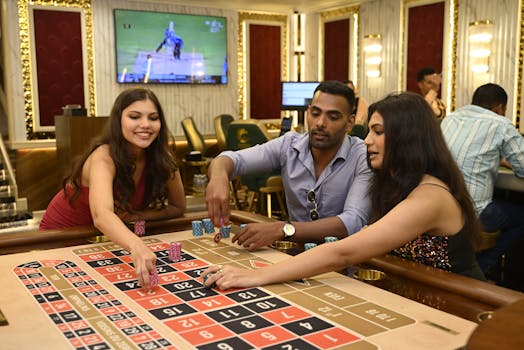
Casino games have never developed in a vacuum. As travel, migration, and commerce expanded, so did the cross-pollination of gambling traditions. For example: - Mahjong, originally a Chinese parlor game, is now played for stakes in casinos across Asia. - Baccarat, once exclusive to French nobility, is the game of choice in Macau, which overtook Las Vegas in gaming revenue in 2006. - Indian casinos in the United States have introduced traditional games like Teen Patti to wider audiences.Today, the global market for casino gaming exceeds $250 billion annually, with Asia-Pacific accounting for nearly 35% of the world’s market share. The rise of regulated online gambling in countries such as the UK, Sweden, and New Jersey further fuels this interconnected industry.
Conclusion: Looking Ahead—The Future of Casino Games
From ancient dice throwers to smartphone strategists, the evolution of casino games mirrors humanity’s quest for excitement, challenge, and social engagement. With every technological leap, new forms of play emerge, blending old traditions with future possibilities. As virtual reality, artificial intelligence, and blockchain technology mature, the next chapter in casino gaming promises even deeper immersion and innovation.
Yet, at its core, the thrill of the game remains unchanged—a timeless blend of luck, skill, and the human desire to take a chance.